
What Every Tech Should Keep an Eye on As Temperatures Rise
Whether it’s from a Midwest heat wave or just the sun pouring through a kitchen window all afternoon, you can expect refrigerators to respond to rising temps.
As any seasoned appliance tech knows, the hotter the environment, the harder that refrigerator works to keep its cool.
But here’s the kicker: most homeowners don’t realize that warm weather exposes weak points in a fridge’s performance. That’s why spring and summer make dirty condenser coils, worn gaskets and airflow issues raise their troublesome heads faster than any other time of year.
For appliance techs? It can mean more callbacks, more “My fridge isn’t cold enough!” appointments — and more opportunities for us to educate customers on how to prevent breakdowns.
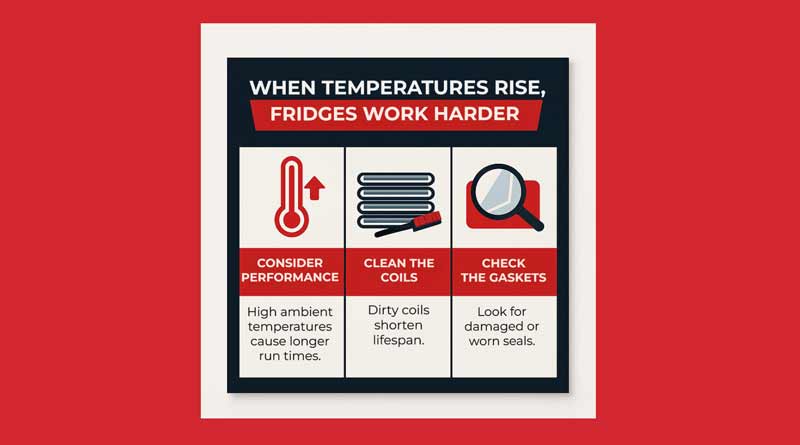
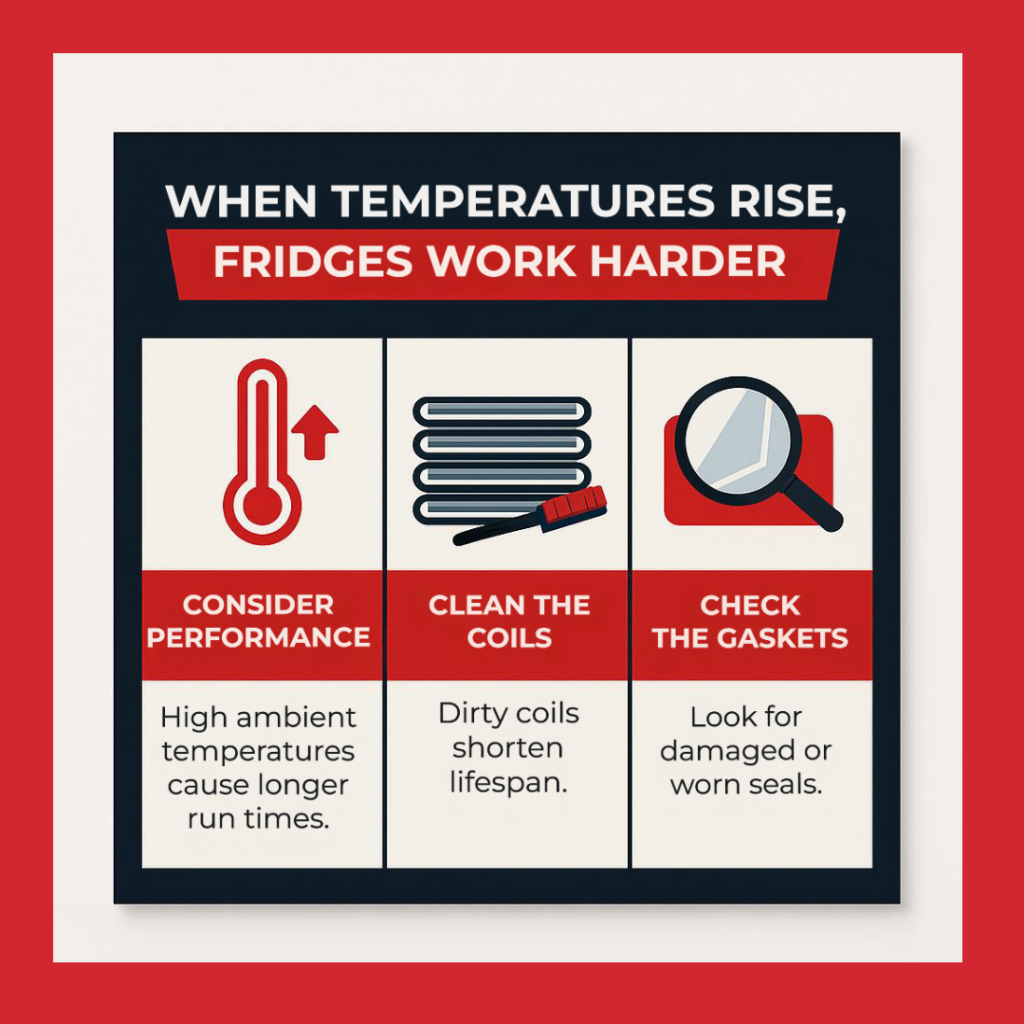
Let’s break down the three biggest points you should be checking when the temperatures climb.
High Temps = Heavy Load on the Refrigeration System
A refrigerator’s job is simple: remove heat. When ambient temperatures rise, the system has to pull heat from already-warmer air, and the condenser has to reject that heat into an even hotter environment. That’s double the workload.
You’ll notice it most in:
- Longer compressor run times
- Higher discharge pressures
- Hotter condenser coils
- Reduced cooling efficiency
This is where heat exposure reveals every weakness the fridge already had. If the system is borderline in winter, it will absolutely show signs of struggle in summer. Making customers aware of this is key. When they understand the “why,” they’re usually much more open to the “what to do next.”
Condenser Coil Cleaning: The Low-Hanging Fruit With the Biggest Payoff
If there’s one maintenance task that makes the biggest difference during hot weather, it’s cleaning those coils.
Dirty condenser coils can increase energy use by up to 30% and raise operating temps enough to cause warm fridge complaints, premature compressor wear or even sealed system failure.
When the heat is up, a small layer of dust becomes a big problem.
Be sure to:
- Always visually inspect coils. And don’t just trust a quick flashlight glance.
- Check airflow around built‑ins. Toe-kick vents are often half-blocked by pet hair.
- Explain to homeowners why twice‑a‑year cleanings are ideal.
- Check both coil cleanliness and condenser fan operation together if the compressor is running hot.
Gasket Checks: The Silent Cause of Warm-Fridge Symptoms
A worn or torn door gasket acts like a slow leak in a boat. It might not sink the ship instantly, but it absolutely keeps the system working overtime. In warm weather, that extra infiltration of humid air is brutal.
Look for:
- Gaps at corners
- Hard, brittle sections
- Tears from frequent opening
- Weak magnetic strip contact
- Mold buildup
- Door not fully closing due to hinge sag
A quick dollar‑bill test goes a long way with homeowners. If the bill slides out without resistance, you’ve identified a problem they can see and feel.
Summer exposes the vulnerabilities in any refrigerator. As temperatures rise, the best service techs stay proactive: check condenser coils, inspect gaskets, evaluate airflow and educate customers on the realities of warm‑weather performance.
The heat isn’t going anywhere. But with the right checks, neither is your customer’s cooling.

