
The 10 Most Common Misdiagnoses in Plumbing
Plumbing calls like to throw curveballs.
You roll in expecting a quick fix, then the pipes surprise everyone. Everything costs time and parts, and it can grind the schedule to a halt.
The upside is that many misdiagnoses follow repeatable patterns. Spot the patterns and you’ll stop chasing maybes and start clearing calls faster.
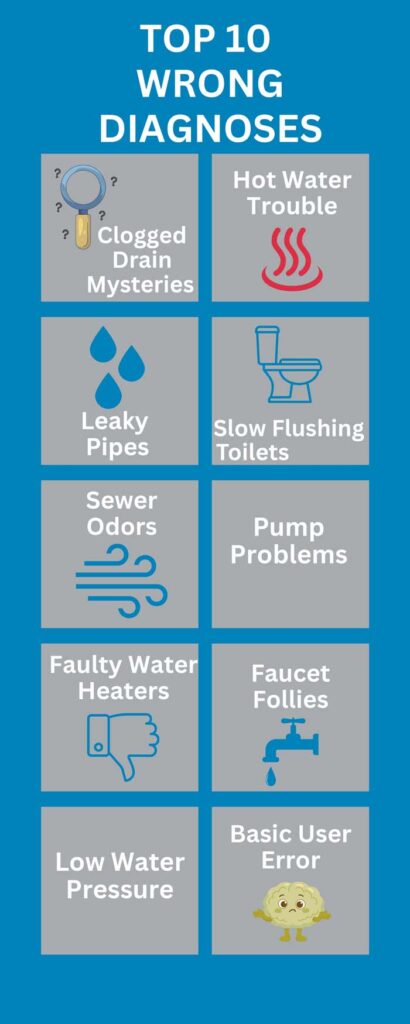
Here are our top 10 troublemakers that trip up even seasoned plumbers:
- Water heaters get blamed for every hot‑water problem
When customers lose hot water, the heater gets blamed first. But bad thermostats, crossed lines or mixing‑valve issues often create the same symptoms. Check incoming water temperature and valve operation before ordering a tank or tankless unit.
- Clogged drains that aren’t clogged
Slow drains trigger the snake right away. Yet vent issues, bellied lines or partial blockages can mimic full clogs. A camera inspection or vent check saves time and spares unnecessary augering.
- Toilets that are replaced for problems in the line
A toilet that doesn’t flush well leads many techs straight to a new bowl. Often, however, the issue hides farther down the line. Roots, offsets or sagging sections create the same weak flush customers blame on the fixture.
- Leaks caused by fittings – not failed pipes
Water on the floor looks like a pipe failure. Many times, it’s a loose connection, weak joint or worn gasket. A quick inspection around fittings can keep a customer from a much larger repair bill.
- Low water pressure misattributed to failing pipes
Before calling out piping, look at shutoff valves, clogged aerators or pressure regulators. Small restrictions create big headaches. Confirm the easy fixes before you propose repiping.
- No‑hot‑water calls blamed on elements that still work
Electric water heater elements get replaced constantly. Sometimes the real culprit is a faulty limit switch, a thermostat out of calibration or incoming voltage issues. Test the circuit and controls first.
- Sewer odor blamed on the trap
Customers swear the P‑trap dried out. Sometimes it did. Other times, the issue is a cracked vent, a loose wax ring or a failing cleanout cap. A quick smoke test or visual inspection points you in the right direction.
- Pumps replaced when the float is at fault
Sump pumps and ejector pumps get tagged as dead when the float is stuck or misaligned. Free the float or replace it and the system springs back to life without swapping the entire pump.
- Faucets replaced when the cartridge would have done it
Leaks and temperature issues push many techs to replace full faucets. A worn cartridge or loose retaining clip often solves the problem in minutes. Start with the simple fix.
- User error hiding in plain sight
Customers insist nothing changed. Then you find a shutoff valve bumped halfway, a disposal jammed, a washing machine hose kinked or a toilet filled with wipes. A quick walkthrough just might solve your mystery failure in a hurry.
Word to the wise: Take five minutes to check the basics so you can save yourself the next thirty. And when you need the right part without the runaround? We already have it at the counter for you.

