
How Smart Water Systems Are Changing Homes
Water always finds a way.
It finds the pinhole you didn’t see. It finds the basement corner you thought was sealed. It finds the one weak spot in a 20‑year‑old water heater at 3 a.m. on a Sunday.
But today, we’re seeing something new in residential plumbing that lets us get ahead of the problems instead of just cleaning up after them.
Smart water systems aren’t just the latest gadget craze. They’re a real, practical change in how homes manage water, and they’re creating new opportunities for plumbers who want to stay a step ahead.
Homeowners are getting used to having “smart” everything: thermostats, doorbells, garage doors — even their coffee makers. So, it’s no surprise they’re interested in smart water technology to help them protect their biggest investment.
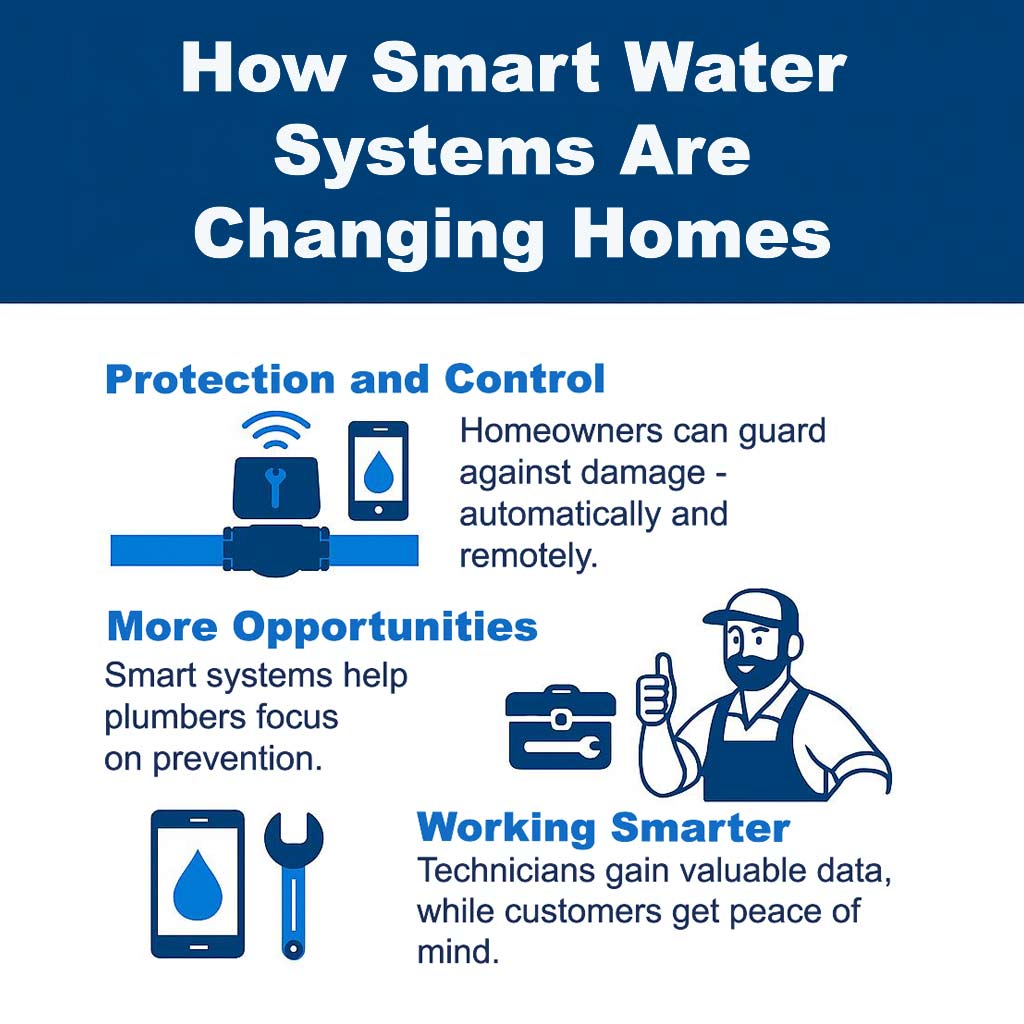
What used to be a simple shut‑off valve and a prayer has now become a whole-home system that watches for leaks and shuts things down automatically when trouble starts.
Homeowners love this peace of mind. The system sees the issue, sends the alert and prevents damage before it becomes a five‑figure insurance claim.
For plumbers, this tech is changing the job in all the right ways. Instead of being called out only after disaster strikes, customers can bring you in early to talk prevention.
From installations and system upgrades to annual maintenance checks, smart water systems open the door to new revenue streams that are a lot cleaner than ripping out moldy drywall.
And let’s be honest: most folks don’t understand their water usage at all. When they see real-time data on how much water their lawn is drinking or how long their teenager spends in the shower, it turns into easy conversations about efficiency and upgrades. What used to take a skeptical homeowner hours of convincing now takes one look at their app.
Another benefit is control. A well‑installed smart water setup gives homeowners a level of visibility they’ve never had before. They can shut off the main from the airport. They can spot a toilet that’s ghost‑flushing. They can see the exact moment a supply line starts acting suspicious. And every one of those alerts is a chance for them to call the plumber they trust (that’s you!).
It’s important to note that this technology isn’t replacing plumbers. It’s elevating the industry. Smart systems still need real-world expertise: proper installation, calibration, testing and long-term service. A device might detect a leak, but a plumber fixes the reason the leak happened.
There’s no doubt the trade is changing. But in this case? It’s changing in our favor. Smart water systems help us work smarter, not harder. Plus, they give customers exactly what they want: more control, fewer surprises and homes that stay dry.
Here’s our take: Any tool that helps keep a plumber out of a flooded basement at midnight? That’s worth paying attention to.

