

Jobsite Safety in Tight Spaces: Protecting Your Crew
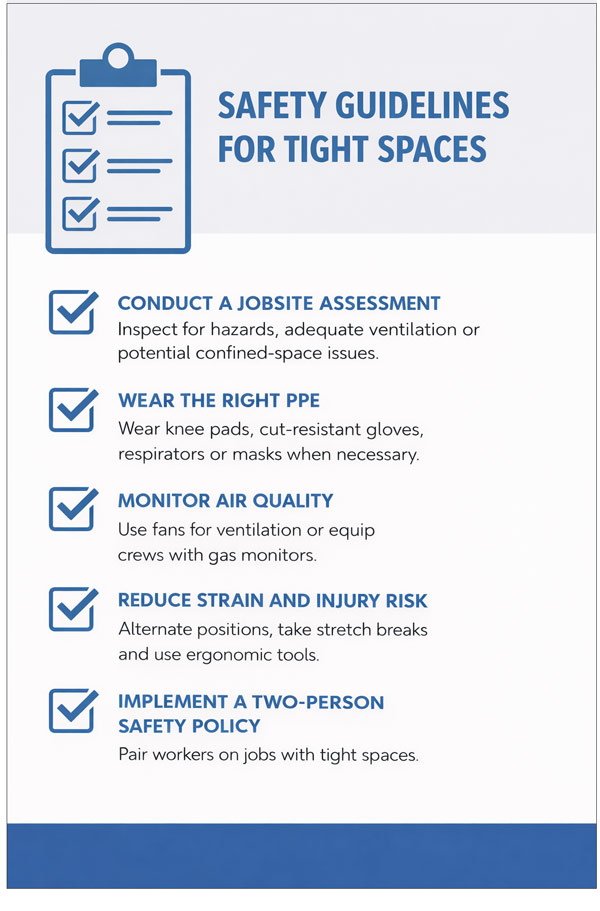 In the plumbing world, tight spaces and crawl areas come with the territory.
Whether it’s a cramped crawlspace under a 1950s ranch home or the narrow mechanical room of a commercial building, plumbers routinely work in environments that most other trades never have to squeeze into. And while these spaces may be common, the safety risks inside them – limited mobility, low visibility, heat stress, air quality issues, sharp objects and confined‑space hazards – are anything but routine.
Protecting your team in these environments isn’t just about compliance. It’s about building a safety culture that reduces injuries, strengthens morale and ultimately increases your company’s long‑term productivity and profitability.
Here’s how plumbing companies can keep crews safe while working in the toughest spaces.
- Start With a Jobsite Assessment
Before anyone crawls in, every tight space deserves a quick but thorough safety check.
- Inspect for exposed nails, screws or jagged edges
- Check for standing water or moisture pockets
- Ensure the area has adequate ventilation
- Look for signs of pests or contaminants (rodents, mold, insulation fibers)
- Evaluate whether the space qualifies as a confined space under OSHA guidelines
A few minutes of pre‑planning will save you hours, days — even weeks — of downtime caused by avoidable injuries.
- Use the Right Personal Protective Equipment (PPE)
In tight spaces, PPE is more than a requirement: It’s protection against the unexpected. At minimum, your crew should have:
- Knee pads for crawling over concrete, joists, and debris.
- Cut‑resistant gloves for working around sharp metal and old plumbing.
- Respirators or N95 masks if dust, mold or insulation fibers are present.
- Head protection (bump caps work well when hard hats don’t fit).
- Adequate lighting such as headlamps to keep hands free.
Even experienced plumbers forget PPE when rushing. That’s why company culture (not just reminders!) can keep compliance high.
- Monitor Air Quality and Temperature
Crawlspaces often trap heat, moisture and fumes. Poor air quality can cause dizziness, nausea or worse. If a space feels stuffy, you are safe to assume it needs ventilation.
Use portable fans when possible and equip crews with gas monitors for spaces that might expose them to carbon monoxide or low‑oxygen conditions. You’ll especially find those near boilers, furnaces or older utility lines.
Finally, hydration and heat‑stress awareness are critical. Working in a cramped, humid crawlspace can elevate body temperature fast, even during cooler weather.
- Improve Mobility and Reduce Strain
Awkward positions are the silent killer of plumbing careers. Repeated strain in tight quarters can accelerates long‑term injuries. Teach your team to work smarter by:
- Using right‑angle tools and compact power equipment designed for tight areas.
- Alternating positions to avoid prolonged strain.
- Taking brief stretch breaks before and after crawling.
- Using lightweight cordless tools whenever possible.
- Create a Two‑Person Safety Policy When Needed
No plumber should work alone in a risk‑prone crawlspace. Whether it’s heat exhaustion, entrapment or tool injury, if something goes wrong, a second person makes the difference between inconvenience and emergency.
For plumbers, tight spaces and crawl areas will always be part of the job. But the risks don’t have to be. With thoughtful planning, proper equipment and clear company standards, plumbing businesses can prevent injuries while giving technicians the confidence to work efficiently and safely – even in the most challenging environments.

